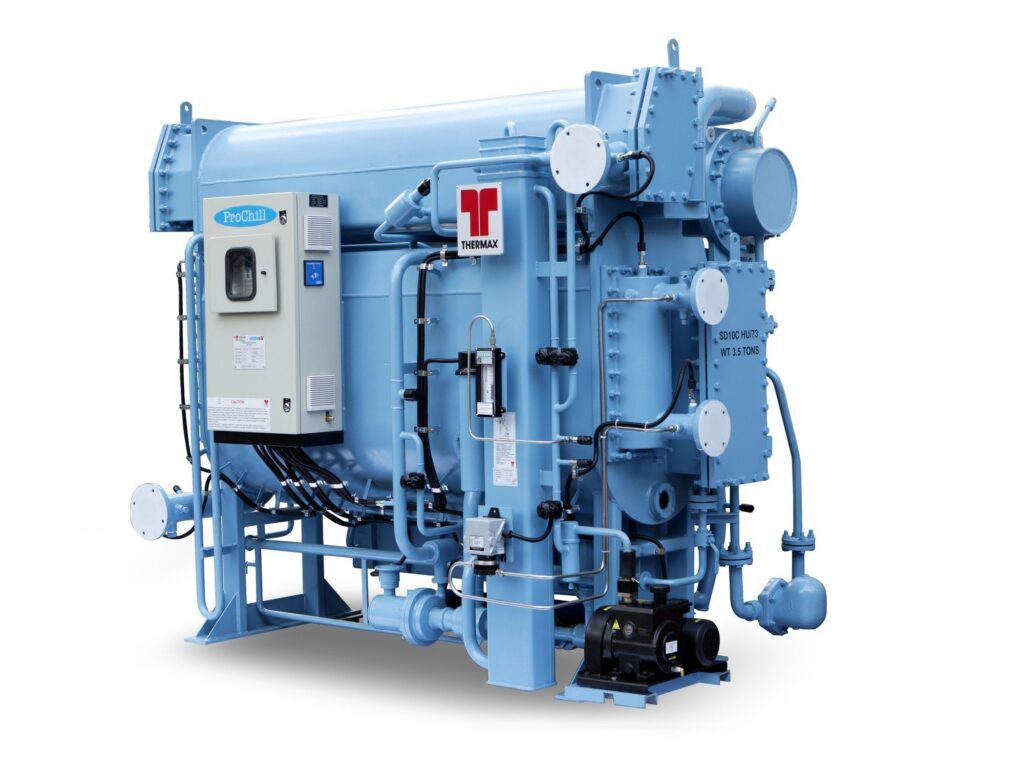
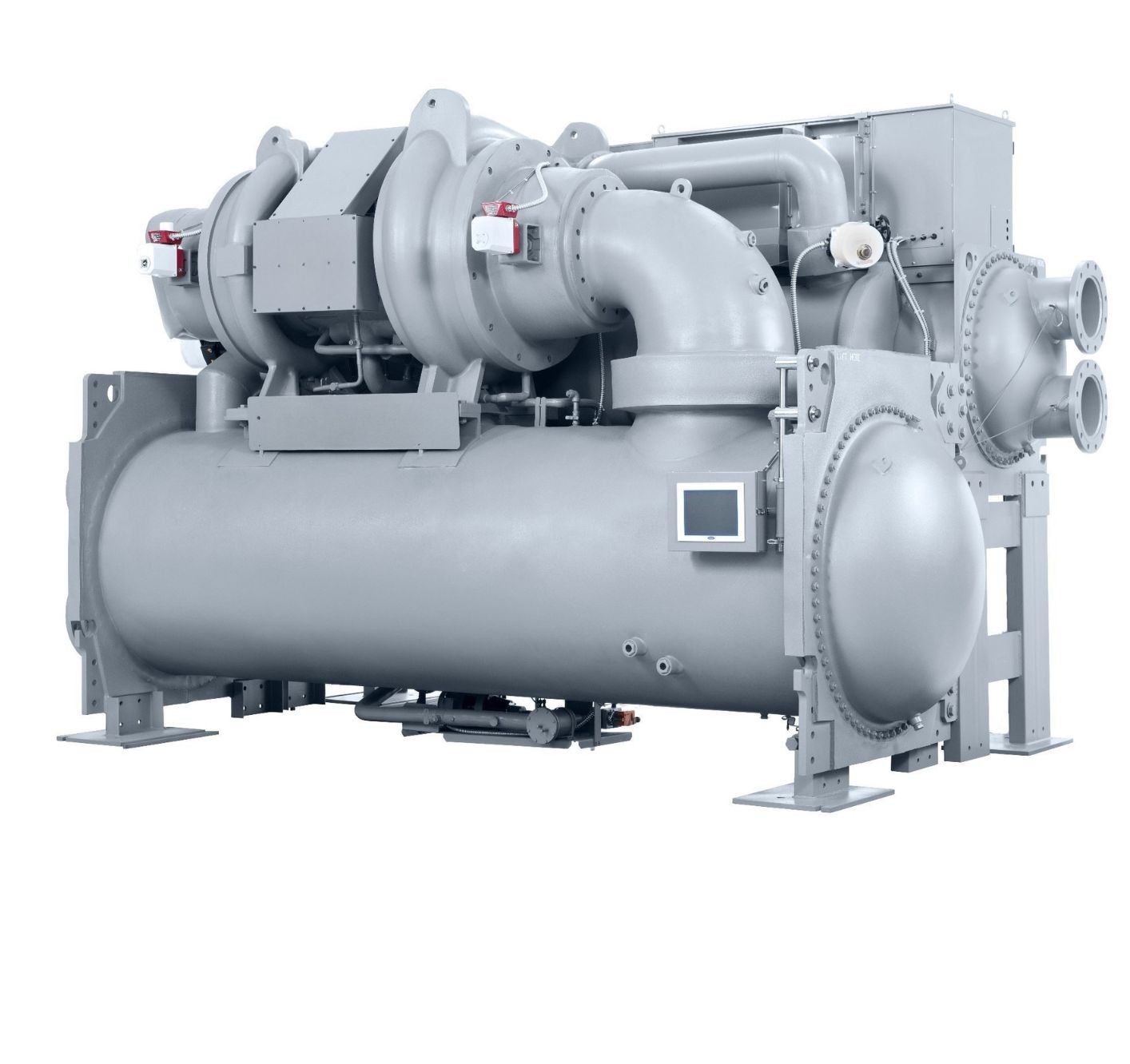
The function of an industrial chiller is to move heat from one location (usually the process equipment or product) to another place (usually the air outside the manufacturing facility). It is very common to use water or a water/glycol solution to transfer the heat to and from the chiller, which may require the process chiller to have a reservoir and pumping system. Regardless of your industry and process, making sure that you have sufficient cooling is critical to productivity and cost savings.
Key Components
- Evaporator : Evaporators are heat exchangers that transfer heat from the process fluid into the refrigerant causing a phase change, evaporation. Refrigerant enters the evaporator as a low-pressure liquid/vapor mixture and exits as a low-pressure gas. The change of state from liquid to gas occurs at a constant temperature and absorbs energy. A chiller’s evaporator achieves superheated refrigerant vapor. Superheat is when all the liquid refrigerant has evaporated, and the gas temperature increases above its saturation temperature. The process fluid enters as a hot liquid and exits at a lower temperature after transferring energy to the refrigerant.
- Compressor : A compressor takes low pressure refrigerant vapor from the chiller’s evaporator and compresses it, causing an increase in pressure and temperature in the refrigerant. The result is a hot, high pressure gas that is then discharged to the condenser. Without a compressor the chiller system would be unable to cycle refrigerant as it creates the necessary amount of pressure to circulate it throughout the entire chiller system, ultimately facilitating cooling.
- Condenser : The function of a condenser is to convert heat from a refrigerant vapor and condense it into a liquid. This process works by circulating water between a cooling tower and the condenser in water-cooled chillers or blowing cool air over the piping of a condenser in air-cooled chillers. As a result, the condenser allows a chiller to release heat through condensation as it cools refrigerant gas back into a liquid in the form of condensation.
- Expansion Valve: In a chiller system, the expansion valve controls the flow of refrigerant from the condenser to the evaporator. The expansion valve achieves this by lowering the pressure of the refrigerant liquid which causes a phase change from a liquid to a low pressure gas. Thus allowing the refrigerant to absorb heat and readily evaporate it once it enters the evaporator component.