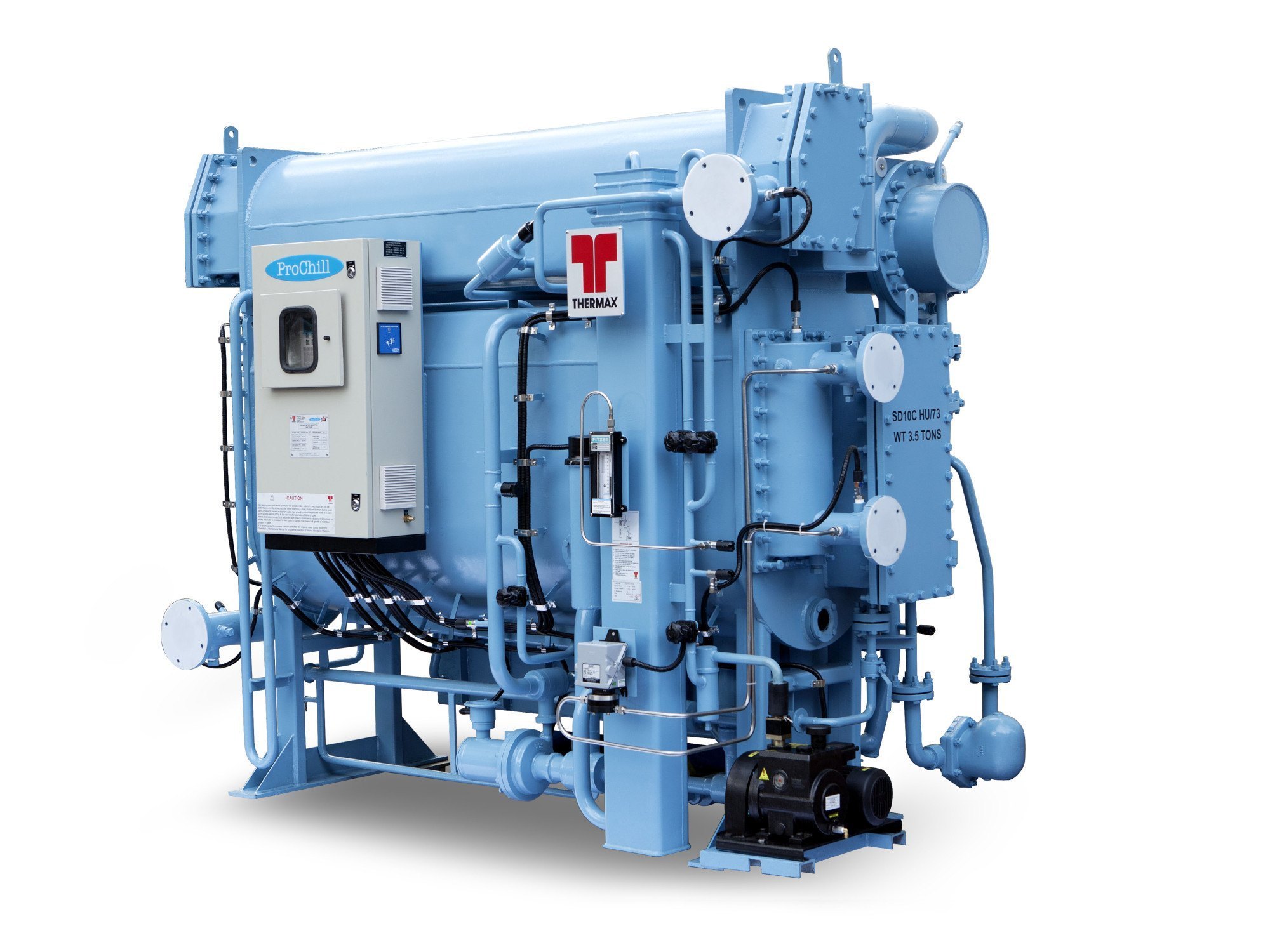
- Heat Source Driven: VAMs utilize thermal energy (heat) from sources like waste heat, steam, hot water, or natural gas, reducing the need for electricity for cooling.
-
Reduced Energy Consumption: By leveraging waste heat, VAMs significantly lower electricity consumption compared to compression chillers, making them more energy-efficient.
-
Lower Operating Costs: The use of waste heat as the primary energy source results in lower operational costs for VAMs.
-
Environmental Benefits: VAMs can reduce carbon emissions and overall environmental impact due to their reliance on waste heat and lower electricity consumption.
-
Wide Range of Applications: VAMs are suitable for various industrial and commercial applications, including food processing, petrochemical plants, paper manufacturing, and more.
-
Natural Refrigerants: Some VAMs utilize natural refrigerants like water, which have a zero ozone depletion potential (ODP) and a low global warming potential (GWP).
-
Lower Maintenance Costs: Compared to compression chillers, VAMs generally have fewer moving parts, leading to reduced maintenance requirements and costs.